

It’s rare that a well-written negative review of a novel makes me even more curious about said novel. After reading this, I want to read Rachel Kushner’s Creation Lake, not to see if what Taylor states is accurate but because the novel he describes seems interesting. A lot of the problems he points out in Kushner’s work, such as a disjointed timeline, I don’t consider weaknesses unless they are poorly executed. The only way to see if I agree with this argument is to read the novel myself, something I think most people who reacted to this review didn’t do.
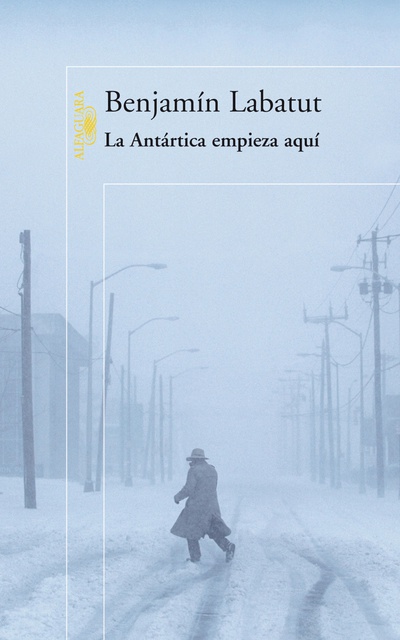
The “you sound like a Wikipedia entry” argument has become common when panning modern novels where authorial erudition or arcane knowledge seems to be an integral part of the story. I remember that Benjamín Labatut’s second book, Después de la luz (After the Light), was poorly reviewed by a Chilean critic precisely because of an allegedly clunky weaving of Wikipedia factoids into a supposedly weak structure. I haven’t read it myself but I’ve read Labatut’s first short story collection, La Antártica empieza aquí (Antartica Starts Here) – which is very good but far more conventional in terms of narrative structure than his later work – along with his third book.
I believe what Kushner does is different and I’d have liked to see more examples in Taylor’s review of these supposedly Wikipediaist digressions and how they work in Creation Lake. It quotes from Kushner’s novel extensively but I think the main flaws he points out are not documented or exemplified sufficiently, a feature that has nothing to do with the review’s length but with the passages he picked.
“Why did you even write this?” as Taylor states, is refreshingly blunt for a review but I believe your argument needs to be more convincing if that is your judgment of someone’s work. Another fascinating response to Taylor addresses some of the review’s faults, but ultimately goes on a tangent about depicting reality through “radical equality” as exemplified by Pisanello’s paintings that I don’t believe analyzes the alleged flaws in Kushner’s own depiction of the world.
I liked Kushner’s The Mars Room and I enjoyed the articles in The Hard Crowd, especially the one about Italian author Nanni Balestrini. There are more tangential points in Taylor’s review that indeed point to flaws such as deadened descriptions of the landscape, a problem with too many contemporary writers, I suspect, who have zero familiarity with nature beyond hiking or occasional trips out of town (and I’m not saying Kushner is one of them.) It also strains credulity that a leftist commune in France would need a translator and that a spy could infiltrate it under such pretense. On the other hand, passages like the digression on kerosene and lice or job interviews and the fake toughness of certain academics sound intriguing. More importantly, a novel about a cynical spy infiltrating a commune by a good writer like Kushner is something that will always pique my interest.
 Gonzalo Baeza